
Cover Story-Harjap Singh Aujla
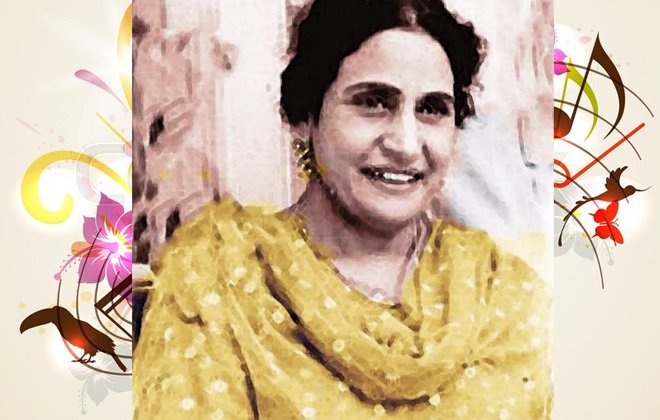
Born on September 19, 1919 in the City of Lahore, in the year in which the massacre at Jallianwala Bagh took place in Amritsar. Parkash Kaur was the eldest daughter of a Sehajdhari Sikh Bishan Dass. The family lived in Mohalla Bhati Gate within the walled section of Lahore. Parkash Kaur used to hear the Rababi women sing during the weddings and festive occasions. At a very young age, she used to copy the established singers in every detail of the melody.
She was bestowed with a very sweet melodious voice. Everyone who heard her singing liked her voice. She did not undertake any formal lessons i
n music, although Lahore was overflowing with great teachers of classical music. Even being not meticulously groomed in the grammar and intricacies of music, Parkash Kaur was still sounding in perfect “Sur” and “Taal” and was a phenomenon in folk music, in English called country music. Shamshad Begum was born in the same year 1919 perhaps in the neighboring city of Amritsar. Born in a family of musicians Shamshad Begum became a radio singer in 1937, the year of the opening of All India Radio Lahore. But Parkash Kaur, after obtaining a difficult consent from her family members, she appeared in the audition test in 1940 and passed it without hitting a glitch. Parkash Kaur got married to Sardar Harbans Singh Suri, an electrical engineer in the Indian Department of Railways. He was posted in Lahore. After independence he got posting in New Delhi. Harbans Singh Suri was a highly supportive husband. When All India Radio Delhi became more demanding on her time, she always banked on her husband’s unflinching encouragement.
Parkash Kaur was already an accredited artist of All India Radio Lahore. In 1943, Parkash Kaur took her thirteen year old sister Surinder Kaur along to the studios of All India Radio Lahore. To the surprise of every one at the radio station, even Surinder Kaur passed the audition test. After August of 1943, Surinder Kaur al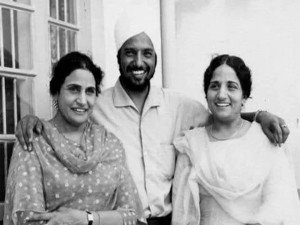 so started going to the radio station with Parkash Kaur and most of the time they sang duets, which became very popular. Budh Singh Taan, who was the assistant to the then head of the music section Jiwan Lal Mattoo at AIR Lahore , started coaching both sisters in light singing. But the road to light singing passed via classical music. This way Parkash Kaur got her first exposure to the intricacies of Hindustani classical music.
Both sisters recorded several duets in each other’s company under the music direction of music director Master Inayat Hussain. Even Parkash Kaur’s earliest duets with Surinder Kaur became very popular. Some of the earliest recorded duets had the following lyrics “Dhol sipahiya weh kithe gayon dil laake”, “Haaye naa vass oye na wass badla aje naa wass oye kaaliya” and “Maawan te dhiyan ral baithiyan ni maaye koyi kardiyan gallorian, ni Kankan nissriyan dhiyan kyon vissriyan maaye”. All these duets became instant hits. Parkash Kaur rendered several “Shabads” also at All India Radio Lahore. These “Shabads” became popular all over the listening area of All India Radio Lahore. During those days transcriptions of the programs were not made. That is why these numbers are not available even in the radio archives. Parkash Kaur briefly sang for films too. One or two such records are available with special category collectors.
On 15th of August 1947, India got independence from the British Colonial Rule. For most Indians it was an occasion for celebration, but for the Punjabis and the Bengalis it was a time of bloody clashes, arson and devastation. The scale of death and destruction brought about by senseless violence associated with ethnic cleansing exercise was unimaginable anywhere of the world. Since Lahore came into the share of Pakistan, the Hindus and the Sikhs of Lahore had to be forcibly shifted to East Punjab. Parkash Kaur and her family members survived the brutalities of the communal frenzy, but they were made to leave Lahore empty handed. Her younger sister Surinder Kaur moved initially to Ferozepore and subsequently to Bombay. Parkash Kaur and her husband made the right move. After staying for a short while in Amritsar, Parkash Kaur and her family settled in New Delhi. Incidentally Delhi became the city with the highest refugee Punjabi population and it provided a ready made market for Punjabi music. Parkash Kaur had become the best known Punjabi female singer in Northern India. From day one she was in great demand in metropolitan Delhi and the national capital region. In the adjoining state of Punjab also there was a great demand for Parkash Kaur’s music and live performances. She frequently performed live in all the major cities of Punjab, including Amritsar, Jalandhar, Ludhiana, Ferozepore and Ambala. Once or twice a month, she used to perform at All India Radio Jalandhar too.
Parkash Kaur’s most popular songs between 1948 and 1952 happened to be “Gori diyan jhanjran bulaondiyan gayeeyan” and “Chan weh ki showkan mele di, pair dho ke jhanjran paondi meldi aondi ki shaonkan mele di”. Some others are “Kithe te laaniyan tahlian ve pattan waaliyan ve mera patla maahi, kithe te laawan shatoot besamajh jeenoo samaj naa aayee” and “Aap mahi ne chug laiyan ni meriyan dukhan kanaan diyan waaliyan”. Initially in Delhi, Parkash Kaur sang several duets with Trilok Kapur including “Ghut paani pilade ni sohniye gharha bharendiye naare, jaa hor kite jaa pi weh mundiya khooh wagende saare” and “Boohe te marangi jandre we peke laavan gi dera, we naukraa peke laawangi dera”.
When Surinder Kaur was rubbing shoulders with the elite of play back singers in Bombay, Parkash Kaur was training another of her youngers sisters Narinder Kaur, who lived in New Delhi. Even Narinder Kaur got approval as a radio singer at All India Radio Delhi. Some of her gramophone records can be traced back to 1950. One was under the music direction of famous music directors Pandit Husan Lal Bhagat Ram. Most of Parkash Kaur and Narinder Kaur’s music makers were Pandit Amar Nath, Mujaddid Niazi, Kesar Singh Narula and K. Panna Lal.
In 1952, Surinder Kaur also returned from Bombay to the North and settled in New Delhi. This move reunited the two sisters and revived the memories of the good old days in Lahore. After that Punjabi music witnessed a flood of popular duets by these two singers. They will often sing together for “His Master’s Voice recording company” and All India Radio Delhi. Both sisters were approved as special class radio singers by All India Radio. This category is higher than the “A” class. Some of the most famous religious songs rendered by Parkash Kaur and Surinder Kaur included “Chum chum rakho ni eh kalgi jujhar di, phullan naal gundo larhi heeriyan de haar di”, “Kithe maata toriya Ajeet te Jujhar noo and “Maachhiwarhe wich baitha shehanshah jahan daa, hath wich khanda pichhe dhasna Kaman daa”. All the numbers bacame classics.
The two sisters churned out most popular duets one after the other from 1952 to 1982. Parkash Kaur must have recorded something like five hundred records in her entire life span. She was active in music business almost till the time of her death. Prior to her demise for quite some time she was not in good health. Parkash Kaur died on November 2, 1982 after a disability caused by a serious accident. Even in her ill health, before death, she was in great demand at All India Radio. During the post Mrs. Indira Gandhi Assassination riots, her house was torched in November of 1984. Her son Jaspal Singh Suri, escaped the violence and moved to America after 1984.
Parkash Kaur is not with us for decades, but thanks to her outstanding popularity, her music is alive for ever. Due to the fast paced advances in science research and overall improvements in recording technology, Parkash Kaur’s voice will always remain alive with her millions of admirers and the unborn posterity. Our greatest tribute to her memory will be to keep her music in circulation for all times to come. Digitization has cleaned up old recordings. It has improved Parkash Kaur’s old recordings too.
Harjap Singh Aujla
harjapaujla@gmail.com